

Compassion: Learning to look beyond what hurts us.
There are things we only understand when life places them directly in front of us. And perhaps this was one of the greatest lessons life ever placed before me.
But this story is not only about what I experienced with my father, it is also about the stories so many people live through every day, silently and out of sight. A world in which people are judged and labelled more and more each day.
For a long time, I thought of compassion as a way of accompanying those who suffer. Listening, being present, trying to understand. Not rushing to judge. Remembering that behind every person lies a story we do not fully know.
But there is a much more difficult kind of compassion than the one we feel towards someone we love or someone whose vulnerability moves us.
It is compassion towards the people we have had conflicts with. Towards those who have disappointed us, hurt us or taken us to emotional places we never wanted to be. Towards those who should have protected us but did not know how.
Because it is easy to talk about compassion when our hearts are open. The difficult part is practising it when they are wounded.
When Life Brings Us Closer to Suffering
My father’s illness and death brought me closer to a reality that no theory could ever fully replace: the vulnerability of a person when life begins to change irreversibly.
Being next to someone at the end of their life means facing something we cannot control. We can care, listen and stay close. We can try to ease their suffering. But there comes a moment when we have to accept that not everything is in our hands.
And I can assure you that this is one of the hardest things to learn: how to be present when we can no longer fix everything.
Illness does not erase a person’s story. Neither does death. We remain who we have been, with our successes, our mistakes, our contradictions and all those parts of ourselves that others may never have come to know.
And when someone dies unexpectedly, before their time, we do not only grieve their departure, we also grieve everything that will never be.
My father and I had our own story, with all its complexities, its moments of distance and closeness, its coming together and drifting apart. His death has led me to look at our relationship from a different place, to live alongside questions, feelings and realisations that do not necessarily arrive in any particular order or all at once.
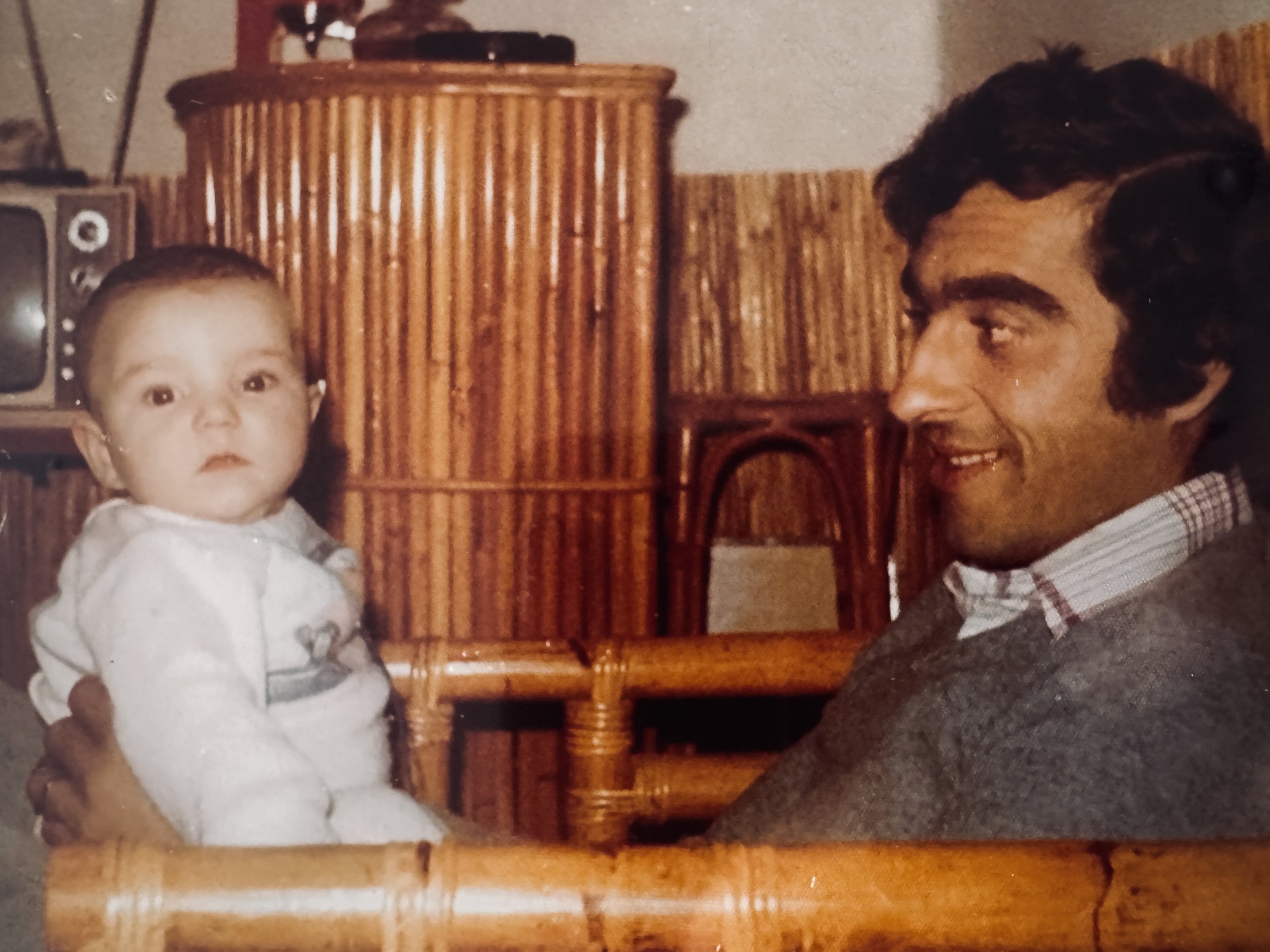
My father and I - 1978
Sometimes, losing someone means more than simply missing them. It also means confronting everything that remained unfinished, what we understood too late and the parts of a relationship we will never be able to explore in the same way again.
I don’t believe death magically turns every story into a beautiful one. Nor do I believe we have to idealise those who leave us in order to love them.
And this is perhaps the hardest part of all: my relationship with my father was not exemplary, nor was it the most beautiful relationship.
I also want to acknowledge that even while accompanying him at the end of his life, there were days when everything felt unbearable, when I could no longer bear to be by his side. Watching him suffer was one of the most horrific things I have experienced in my life.
Even today, I can still hear his cries of pain from those final days, when the right dosage of palliative medication had not yet been found.
But I am convinced that coming close to the end of someone’s life can change the way we look at others. It reminds us that no person can ever be fully contained within the story we have constructed about them.
And even when we believe we know someone, there is always a part of their inner world we cannot access.
That was true of my father, too.
The Story Behind Every Person
In our everyday lives, we are constantly interpreting other people.
We form opinions about their reactions, their silences, their words and their decisions. Sometimes we have good reason to do so. Other times, we build an explanation from just a few fragments of information, simply to quiet our doubts or compensate for something we are missing or wish had been different.
We see someone getting angry and think they are a difficult person. We see someone becoming distant and believe we no longer matter to them. Someone reacts in a way that unsettles us, and we immediately try to find an explanation.
Your father is no longer there to protect or comfort you, and you believe he has abandoned you.
But how much do we really know about what that person is going through?
We do not know all of their losses, their fears, the experiences that have shaped them or the tools they have acquired, or have never learned to use in their relationships with others. Neither we know what they are trying to hold together in silence.
And yet, we often act as though our interpretation were the whole story. As though we possessed the absolute truth.
Compassion begins when we are able to create a small pause between what someone does and what we decide it means. That pause is where the magic of compassion lies.
And let’s be honest: this is not about denying what we have experienced or justifying every behaviour. It is simply about recognising that our perception does not contain the whole truth about another person.
There is a story behind every person. But there is also a story behind us. This means that two people can find themselves in conflict while carrying wounds, fears and needs that neither of them knows how to fully express.
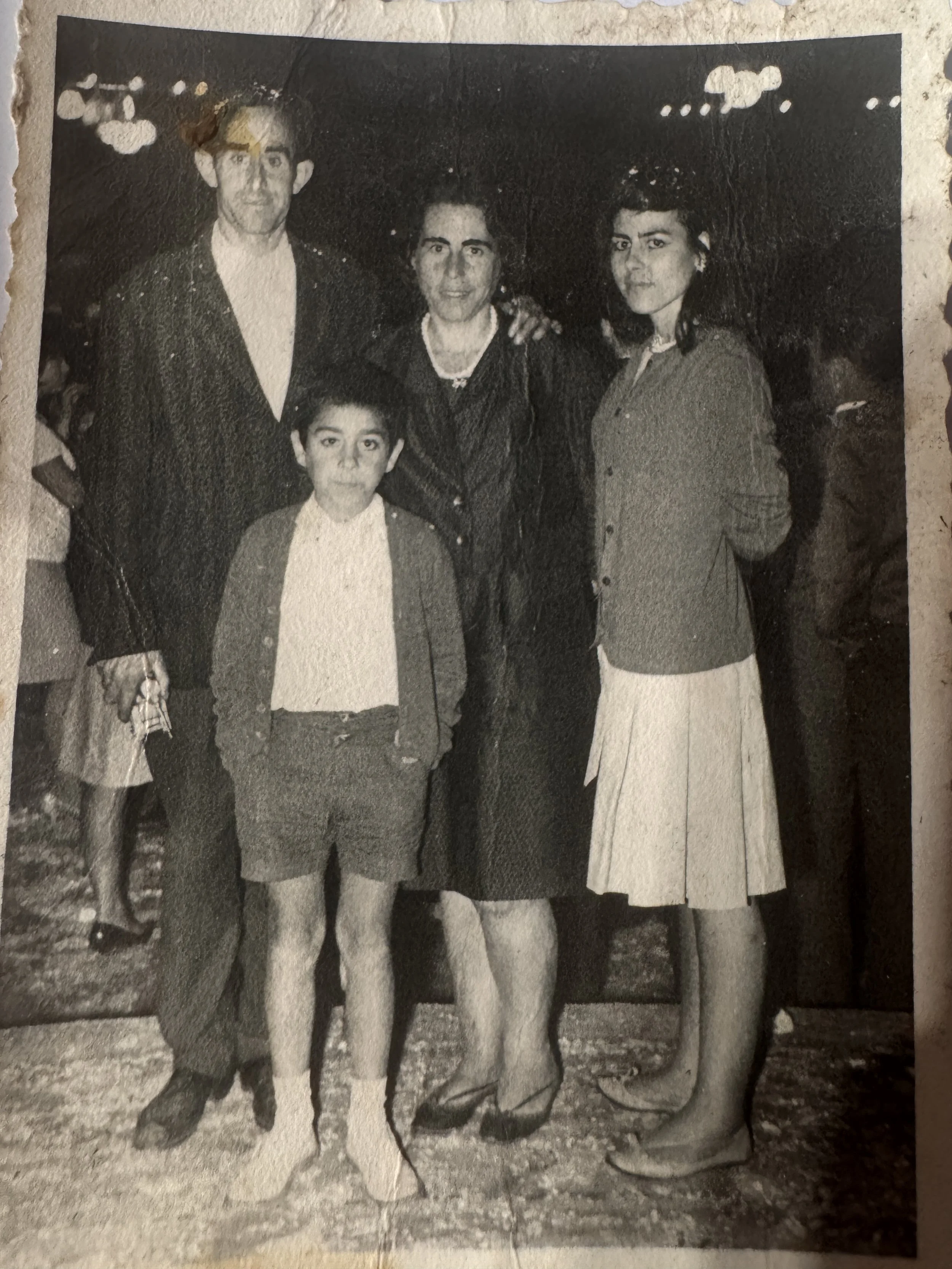
My grandparents and father
I see things from my side, and they see them from theirs. The message they receive can be completely different from the one I intended to send.
Sometimes we hurt each other not because we want to, but because we do not know how to relate to one another differently. We defend ourselves before listening, or we interpret something as a threat when the other person never intended it that way.
Understanding this will not erase the consequences of our actions, but it can help us look beyond them and see things from a different perspective.
Compassion for Those Who Have Hurt Us
Dear reader, this is where compassion stops being a comfortable idea.
Because recognising the humanity of someone who is suffering is one thing. Recognising it in someone with whom we have suffered is something entirely different.
When someone has hurt us, our first need may be for them to understand the impact of their actions. We want them to take responsibility, to listen to our side without immediately becoming defensive, to be able to see what happened from our perspective, and, of course, that is understandable.
Sometimes, what hurts us most is not just what happened, but the feeling that the other person cannot understand why it hurt us.
No matter how much we try to explain it, show them or help them understand our experience, it feels as though they speak another language or live on another planet.
This is where talking about compassion can feel unfair. It can even sound like another demand being placed on someone who is already struggling to manage their own feelings.
Why should I try to understand someone who does not understand me? Why should I try to see their story when they seem incapable of seeing mine?
I have learned that there are no simple answers to these questions. I also don’t believe compassion should become a moral obligation that forces us to forgive before we are ready, reconcile with someone or remain in a relationship that hurts us.
Compassion does not require us to deny our own pain in order to acknowledge someone else’s.
We can understand that someone has their own difficulties while also recognising that their behaviour is not acceptable to us. We can have an idea of where a reaction comes from without having to tolerate it. We can even hope that someone finds a healthier way of relating to others while deciding that, until that happens, we need distance.
Because understanding is not the same as justifying. Forgiveness does not always mean reconciliation. And setting boundaries does not make us any less compassionate.
Perhaps the real challenge is not allowing the pain we have experienced to force us to strip the person who caused it of their humanity.
We do not need to turn someone into a monster to acknowledge that they have hurt us. Nor do we need to blame ourselves for feeling anger, disappointment or sadness.
Imagine if we could hold two truths at the same time: that another person has a story worthy of understanding, and that our own experience deserves to be respected.
For me, this is where a more mature form of compassion may begin. A compassion that does not depend on the other person behaving as we expect, agreeing with us or offering the apologies we need.
A compassion that does not ask us to abandon ourselves.
Sometimes We Understand Too Late
The death of someone leaves us with a reality that is difficult to accept: we can no longer ask them all the things we never fully understood.
Although I was able to have some of those conversations with my father before he passed away, there were many others we never had. Questions that remained unanswered. Aspects of our relationship we might have wanted to see from a different perspective, had we known that our time together was limited. But it wasn’t meant to be.
We cannot know how those conversations might have unfolded or what we might have discovered. We cannot rewrite the past with the certainty that everything would have been different if only we had understood more. But there is something we can ask ourselves: what do we do with what we have learned?
Can we approach our current relationships with a little more curiosity and a little less certainty? Can we try to understand before writing the final chapter of someone’s story? Can we express what hurts us without automatically turning the other person into our adversary?
Sometimes, we wait for life to remind us that people are fragile before we begin to look at them differently.
We wait for an illness, a goodbye or a loss before realising that a human relationship is far more complex than its final chapters.
We will not always have the opportunity to revisit what was left unfinished. But while people are still part of our lives, perhaps we can learn to ask a few more questions before it is too late.
Not to avoid every conflict, but to avoid confusing having a conflict with knowing the person we are in conflict with completely.
Compassion Also Means Accepting Our Limits
There is something else I am learning to consider when I think about compassion: we cannot force anyone to understand us.
We can explain our reasons, try to express ourselves more clearly, listen to another perspective and acknowledge our own mistakes. But we cannot do someone else’s emotional work for them.
We cannot open a conversation if the other person is unwilling to participate. We cannot make someone examine their own reactions if they are not yet able to do so. And above all, we cannot repair a relationship single-handedly.
Accepting this can be painful, especially when we believe that understanding one another could ease some of the suffering.
But it can also free us from a responsibility that was never entirely ours to carry.
Compassion for others cannot be built on the expectation that we must always be the ones who understand, give in, wait or find the right words.
We also need to be heard. We also need to set boundaries.
There will be days when we do not know how to support someone, when we react from our own wounds or when we need to step away to regain our calm.
And this, too, is part of including ourselves in that more compassionate gaze.
It means recognising that we are human beings who are still learning, that we can make mistakes without allowing those mistakes to define our entire identity, and that learning to relate to one another differently takes time, willingness and responsibility.
I am not saying that we should excuse everything we do. Rather, we need to be able to look at ourselves honestly without turning every mistake into a life sentence.
Looking Again
I do not know whether compassion means always understanding others. There are stories we will never fully know, behaviours we will struggle to accept and wounds that need time before they stop hurting.
But perhaps compassion means remembering that our perspective is never complete.
It means remembering that the person in front of us is much more than the moment we met them, the reaction that hurt us or the conflict we failed to resolve.
And that we, too, are much more than our worst responses, our difficult days and the times we have not known how to do better.
My father’s illness and death have brought me closer to questions that have no definitive answers. I do not want to turn this experience into a neat, finished lesson or pretend that pain automatically brings wisdom.
But I do want to allow myself to look at what I have lived through and ask what might change in the way I relate to others.
Perhaps it is not about judging less because we find everything acceptable, but it is about learning to distinguish between understanding a person and approving of everything they do.
Learning to listen without giving up our own voice.
Learning to care without trying to control.
Learning to set boundaries without needing to hate.
And, above all, remembering that we never fully know the story behind another person.
One thing became clear to me through my father’s illness: we can always try to be there for someone, but we cannot always repair what is broken. And, of course, we will never understand one another completely. But we can learn to be more compassionate towards ourselves.
So, the next time you find yourself in doubt, pause for a moment before judging. Ask yourself what you do not know, and remember that another person’s humanity does not disappear when we find ourselves in conflict with them.
Compassion does not erase what happened, nor does it guarantee reconciliation. What is within your power, however, is the ability to change the way you choose to look at what has happened.
And perhaps that, even if it does not solve everything, is already a place to begin.
With light and compassion,
Aida Tipton.