

What teaching yoga in rural areas has given me.
For a long time, I believed that teaching yoga belonged to a certain kind of place. I imagined it lived in studios with polished wooden floors, soft lighting, carefully arranged props, and a timetable full of classes taught back to back. I thought that was the natural home of the practice, the place where yoga was meant to happen and where teachers were meant to grow. Like many people, I absorbed the idea that if you wanted to teach seriously, you had to find your place within that world.
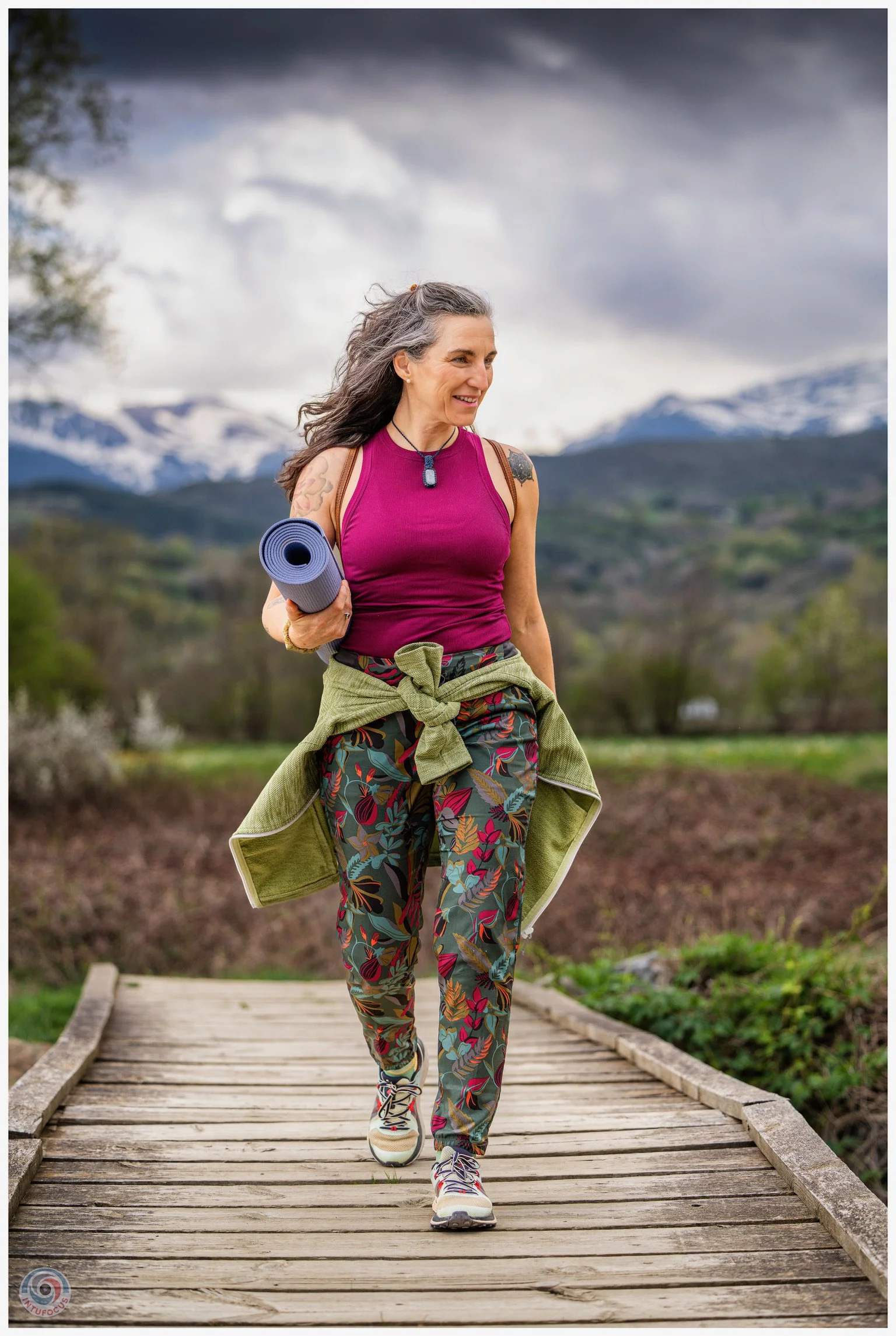
Take yoga with you.
Take yoga everywhere you go: beyond the studio, beyond the mat, beyond the expected. Let it live in the way you think, adapt, heal, and create possibilities where others see limits.
Life, however, has a way of widening our definitions and took me far away from all that noise.
I moved to the mountains, into a small village with only 12 people and a totally new world opened in front of me. Slow pace, great distances, incredible landscapes and a totally different view of what yoga is.
When I began teaching in rural areas, I quickly understood that almost everything I thought I knew about teaching yoga would need to soften and rearrange itself. In these communities, yoga was not already familiar. It was not part of the local culture, not something people automatically understood or sought out. Before I could guide a single posture or invite anyone into stillness, I first had to answer a more basic question: what is yoga, really?
That question sounds simple until you are standing in front of people who have only encountered yoga through fragments and stereotypes. Some thought it was only stretching. Others thought it belonged to a religion that was foreign to them. Some believed it was only for young, flexible women in expensive clothing. Others imagined it as something indulgent, unnecessary, or simply irrelevant to the realities of daily life. I found myself explaining, again and again, that yoga could be a way to breathe more fully, to move with less pain, to rest a tired nervous system, to reconnect with the body after years of ignoring it. I had to learn how to speak about yoga in a language rooted not in trends, but in lived experience. I had to show yoga, to let them taste what really yoga is.
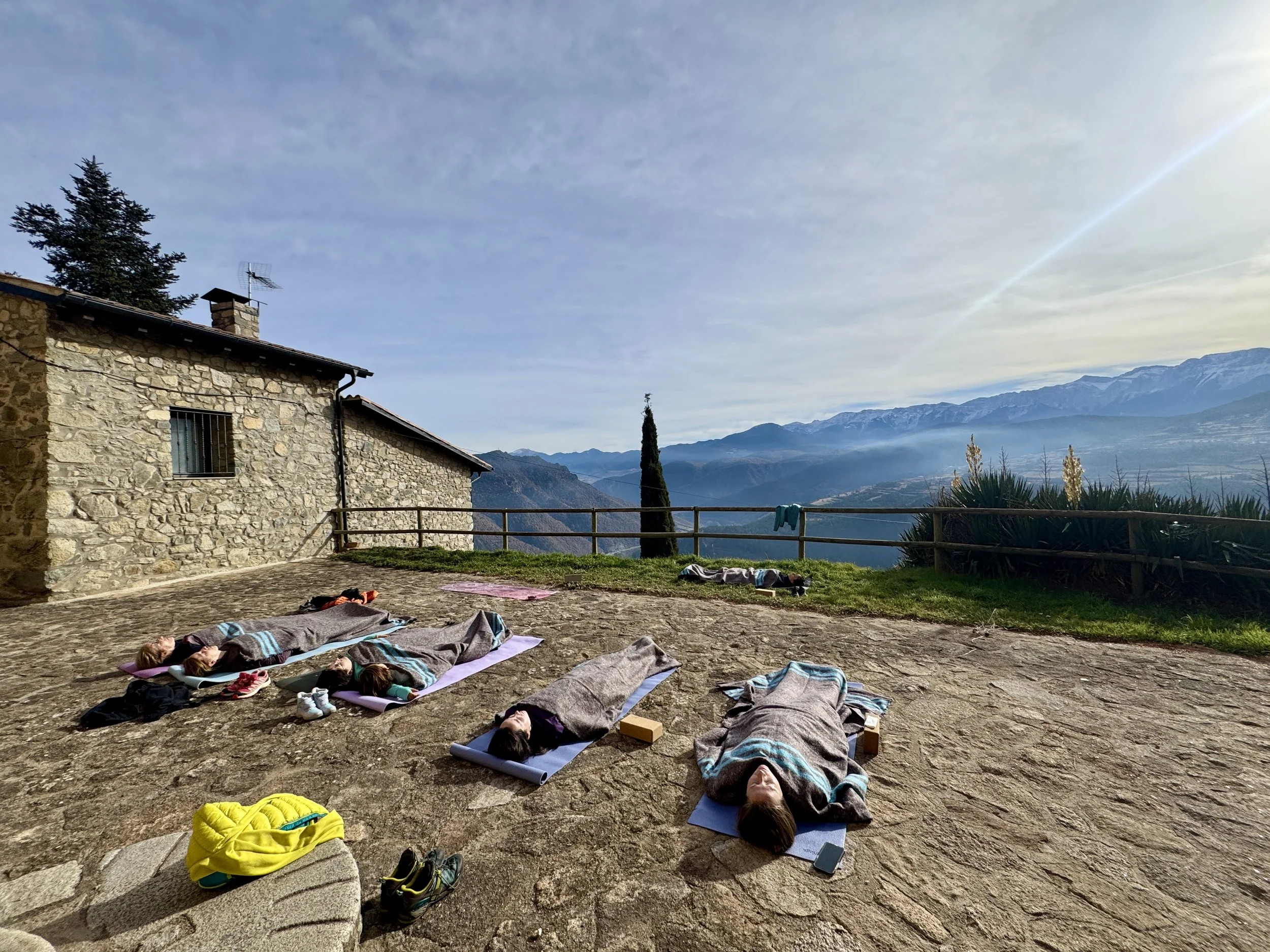
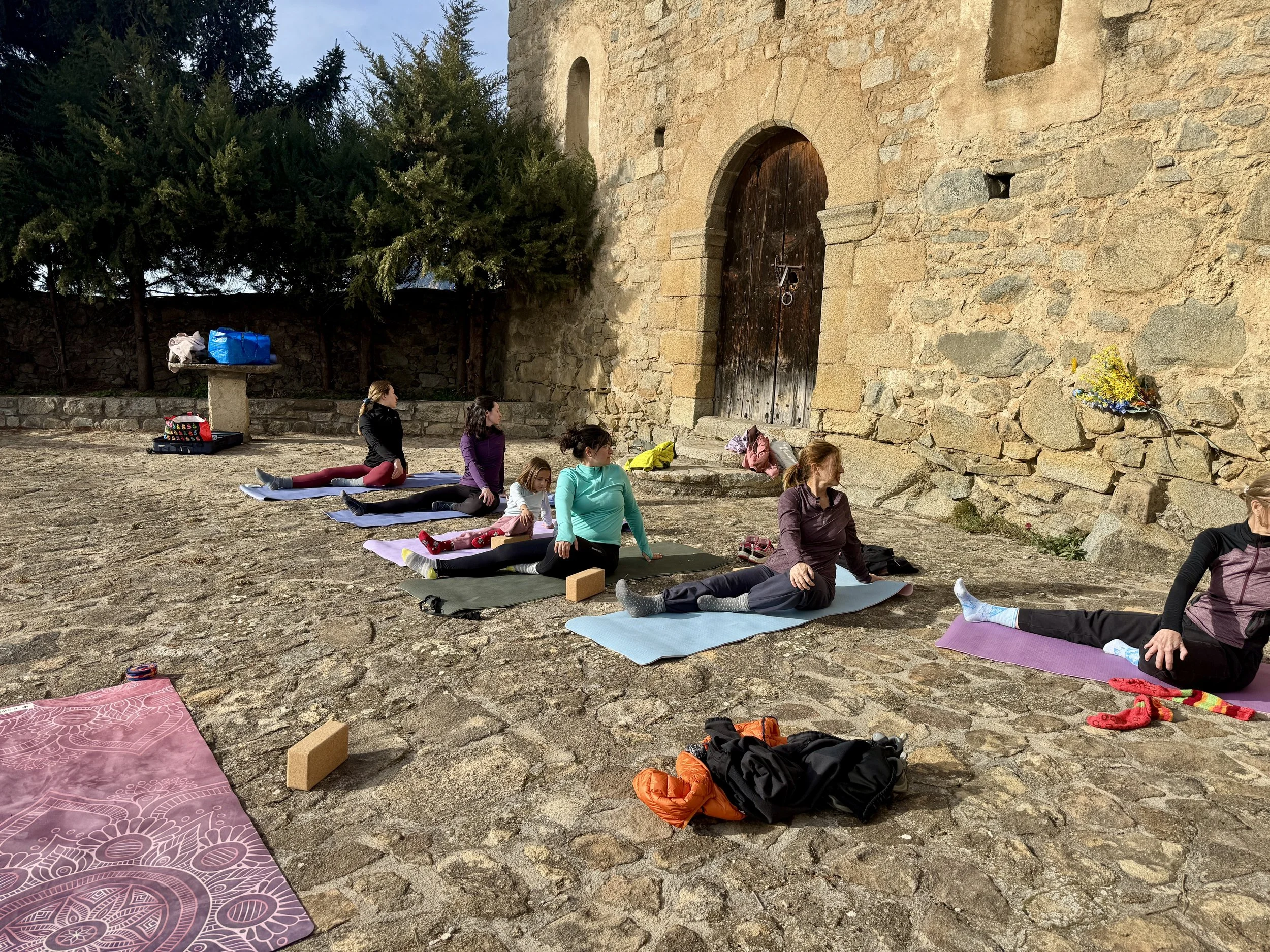
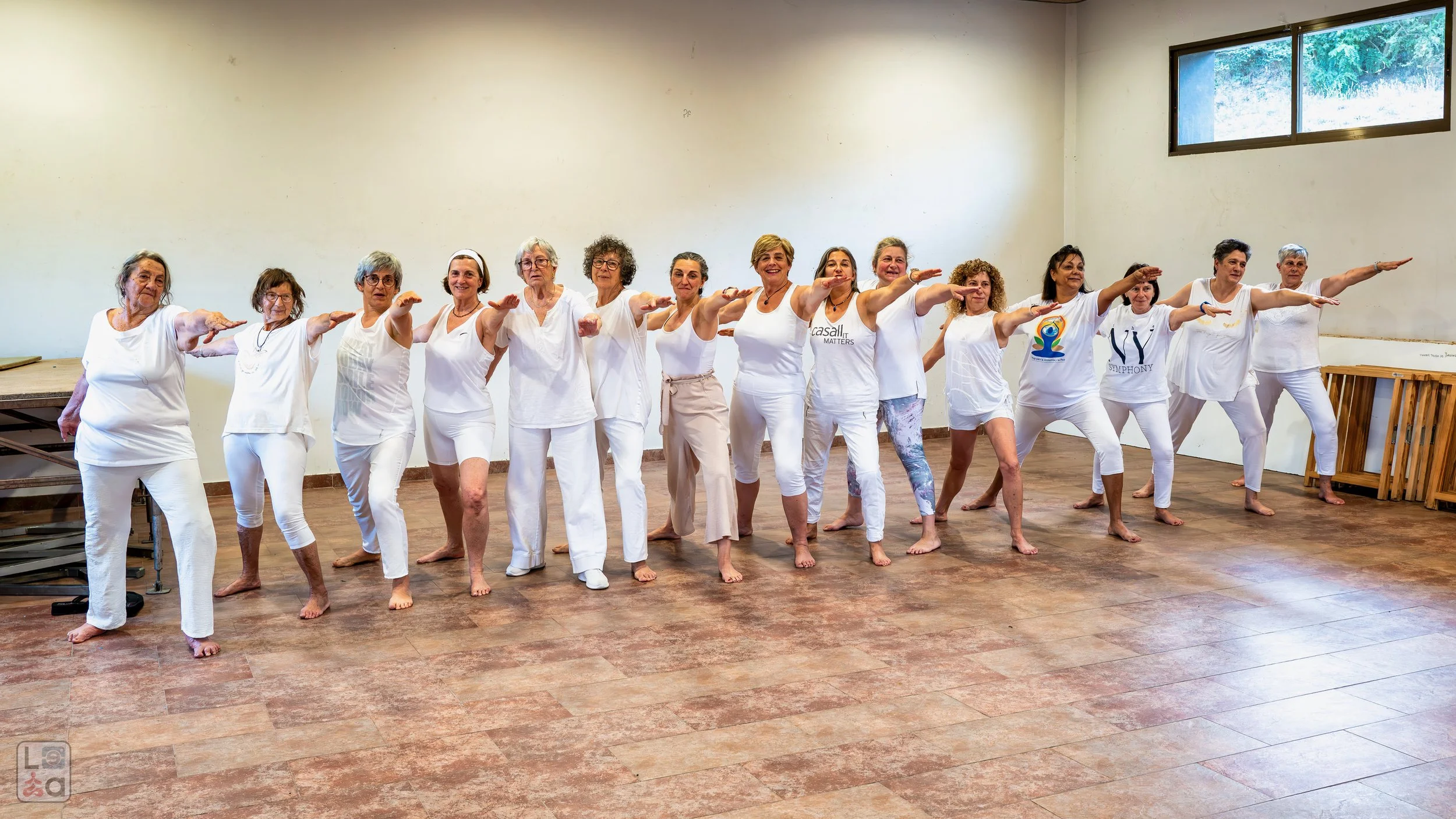
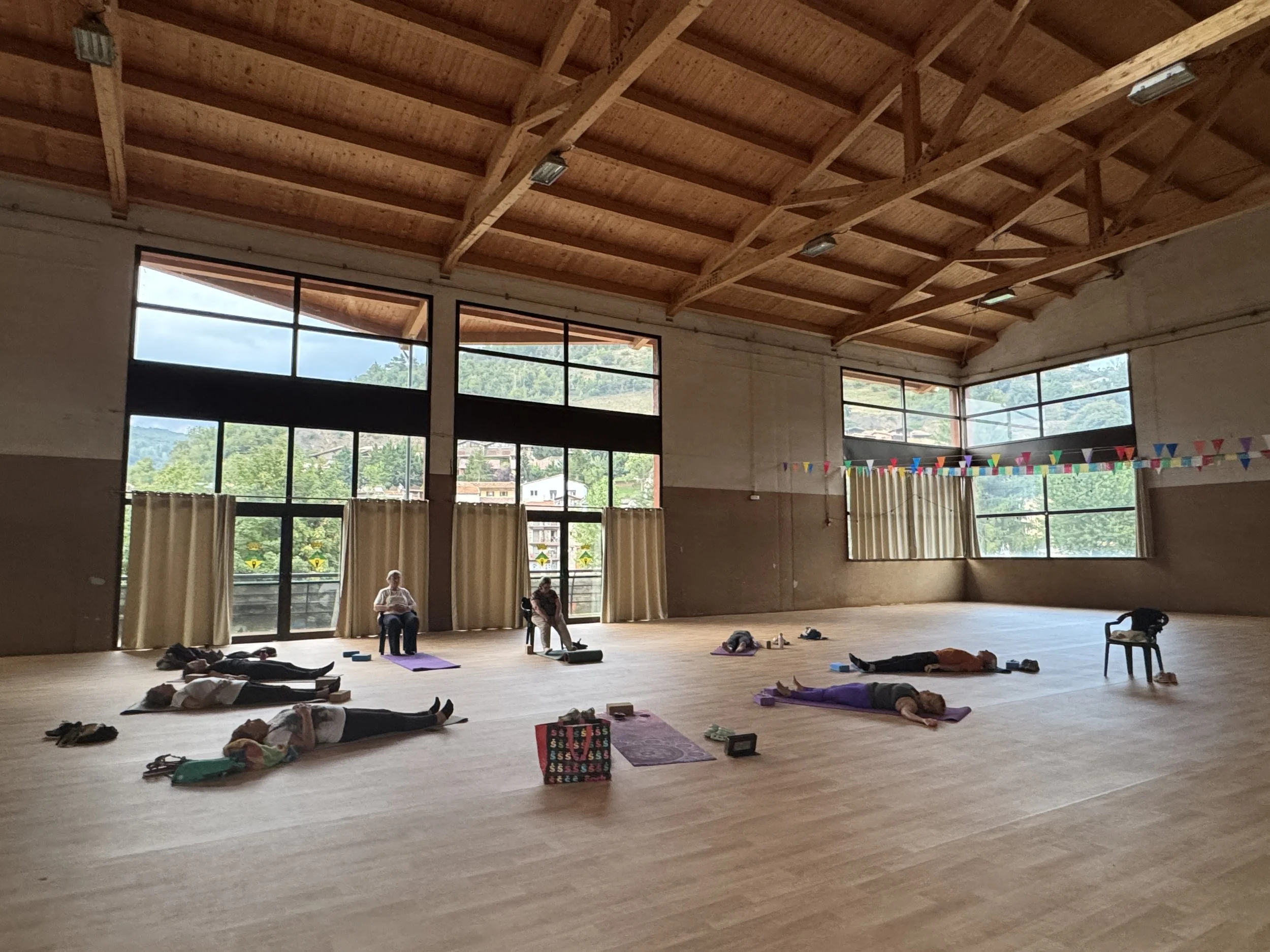
That was not the only challenge. Finding the right spaces was its own journey. There were no ready-made wellness studios waiting with bolsters and incense. Sometimes classes took place in community halls, borrowed rooms, municipal spaces, old buildings that carried the history of many other uses before yoga ever entered them. Some rooms were cold. Some were noisy. Some required setting everything up from scratch and packing it all away at the end. I learned to stop needing perfection. I learned that presence matters more than atmosphere.
Building a consistent group also asked something deeper of me. In rural life, rhythms are different. People’s schedules are shaped by harvests, family care, shift work, local festivities, weather, aging parents, and the practical demands of community life. Attendance was not always predictable. There were classes where only two people came, and evenings where no one came at all. There were moments when I questioned myself and wondered whether I was trying to plant something in soil where it did not belong.
But I stayed, and because I stayed, something began to happen.
Slowly, yoga stopped being an unfamiliar concept and became something woven into the local rhythm. People came back. Then they brought a friend, a sister, a neighbor, a husband who had back pain, a mother who had not exercised in years. The room began to fill not just with bodies, but with trust. People started arriving early to talk and staying after class to share cakes, cookies, worries, stories, laughter. They asked questions not only about poses, but about sleep, stress, grief, breathing, and how to feel better in bodies that had carried decades of work and responsibility.
What formed there was never just a class…it was a community.
It became a place where people could be seen. A place where movement was not about performance but about care. A place where someone in their sixties touched the floor for the first time and smiled with the delight of discovering a forgotten possibility. A place where silence was no longer awkward but nourishing. A place where loneliness softened because others were there, week after week, breathing in the same room.
Those experiences changed my relationship with teaching so profoundly that I know I will never be able to step into a studio in the same way again. This is not because studios have no value. Many offer beautiful spaces and meaningful work. But once you have witnessed what happens when yoga becomes part of the fabric of a community, something in you changes. You begin to understand that the true power of the practice is not in the room itself, but in the relationships it makes possible.
In those rural classes, yoga became less aesthetic and more essential. It was no longer something separate from life. It was life meeting itself with a little more breath, a little more softness, a little more awareness.
Through my yoga classes in rural areas, I have had the also the privilege of working closely with domestic violence support groups and first responder officers, offering wellness practices that help reduce stress, restore emotional balance, and build resilience. These sessions create a safe and supportive environment where participants can reconnect with their bodies, process tension, and experience moments of calm amid demanding circumstances. Whether supporting survivors on their healing journey or helping first responders manage the pressures of their work, this collaboration highlights the power of yoga as a tool for recovery, strength, and community care.
That understanding has led me to the next chapter of my path. I have recently begun creating a project to build community through yoga, presence, and care within the local hospice and hospital. It feels like a natural continuation of everything these rural spaces have taught me. There are places where yoga is still imagined as something reserved for the healthy, the young, the strong, or the flexible. Yet some of the most profound forms of yoga belong precisely where life is most tender: beside hospital beds, in rehabilitation rooms, in waiting areas, in spaces of grief, uncertainty, transition, and recovery.
My own experience with the death of my father deepened my understanding of grief, loss, and the importance of compassionate care during life’s most difficult moments. It also showed me how yoga can offer gentle support in palliative care by easing anxiety, encouraging mindful breathing, reducing physical tension, and creating space for comfort, dignity, and emotional peace for both patients and their loved ones. Through all of this work, I have seen yoga become a powerful tool for healing, connection, and hope.
My yoga may not look like what social media has taught people to expect. It may be a breath shared with someone in pain. A seated movement for stiff shoulders. A hand on the heart. A moment of guided rest for a family member carrying fear. A practice of presence with someone approaching the end of life. It may be invisible to the outside eye, but deeply transformative where it matters most.
I often think about the teachers who feel discouraged now, especially in a world where yoga can seem saturated, competitive, and driven by image. It is easy to believe there is no space left, that everything has already been done, that if you do not fit the visible model of success you have somehow failed. But the truth I have encountered is the opposite.
There are spaces still waiting to be served. There are communities that have never been approached. There are people who need yoga but would never think to walk into a studio. There are schools, care homes, villages, hospitals, women’s groups, social projects, and local centers where this practice could become a form of real support.
Sometimes we look for opportunity where everyone else is looking, and miss the places where our work could matter most.
Yoga has survived and evolved for centuries because it adapts. It has crossed languages, continents, religions, social structures, and eras of history. It has never belonged to only one kind of person or one kind of room. It adapts not only to our time, but to the places where we live and the needs we carry there. It can live in a city studio and in a village hall. It can support an athlete and an elder. It can meet someone in celebration and someone in sorrow.
At its heart, yoga has always meant union.
Union between breath and body, between inner life and outer life, between people who might otherwise remain strangers, between suffering and tenderness, between where we are and where healing begins.
I once thought I was bringing yoga into rural spaces.
What I know now is that those communities brought yoga back to me.
Love and light to you.
Aida.